
How to Care for Your Leather Watch Strap
A practical guide to keeping your leather strap comfortable, beautiful, and ready to age well with you.
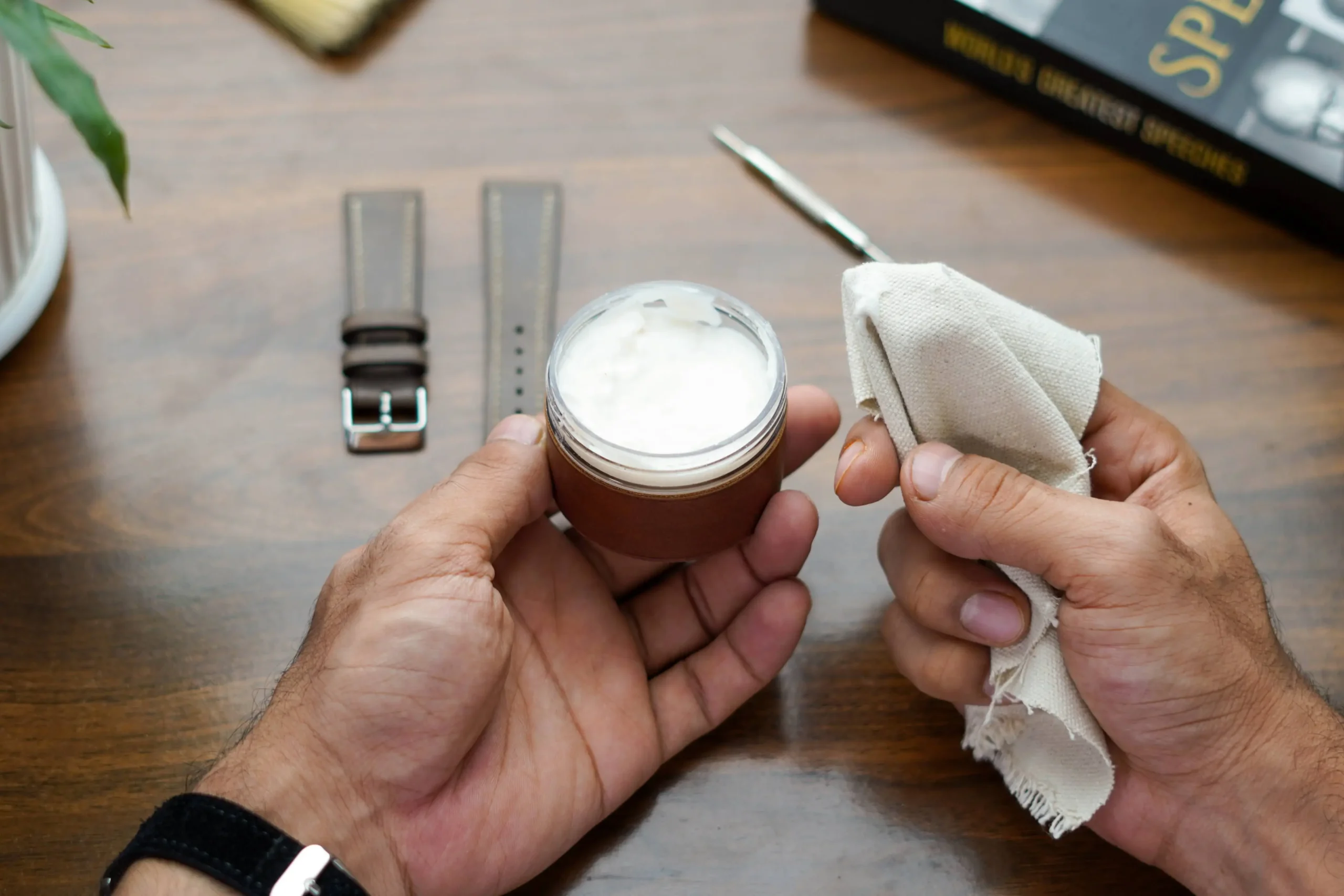
A good leather watch strap is designed to be worn. It should bend around your wrist, develop character, soften with use, and gradually feel like it belongs to you. But leather is also a natural material — and like a good pair of shoes or a well-made wallet, it benefits from a little attention.
That's especially true for a strap. Unlike most leather goods, it spends hours directly against your skin, encountering perspiration, movement, friction, temperature shifts, and the occasional splash of water. Over time, all of that touches the leather, the lining, the edges, and the stitching.
The good news: caring for a leather strap really isn't complicated. You don't need a shelf of products, a weekly polishing ritual, or the goal of preventing every mark from ever appearing. It comes down to something much simpler — keep it clean, keep excess moisture away, give it time to rest, and let it age the way it's meant to.
At Nakshara, we build our straps from full-grain leather specifically because it develops character through use. Caring for it well isn't about keeping it looking exactly like day one — it's about helping it age gracefully.
Why Does Leather Need Any Care at All?
Leather is a natural material with a complex fibre structure. Tanning stabilises it for everyday use, but it still responds to its environment — and your wrist is a fairly demanding one. On a normal day, your strap encounters perspiration, body oils, dust, friction, sunlight, humidity, shifting temperatures, sunscreen, perfume, and the occasional splash of water.
None of this ruins a strap on its own. The real issue is repetition without recovery — a strap that's regularly soaked in sweat or water and never given time to dry properly will show it eventually. Small, sensible habits do far more good than expensive treatments.
Think of it the way you'd think about a good pair of leather shoes — you wouldn't wear the same pair every day without a break, and your strap benefits from that same logic. Even a simple two-strap rotation (Strap A Monday, Strap B Tuesday, and so on) makes a real difference over time — and it means you get to enjoy more than one colour or leather with the same watch.
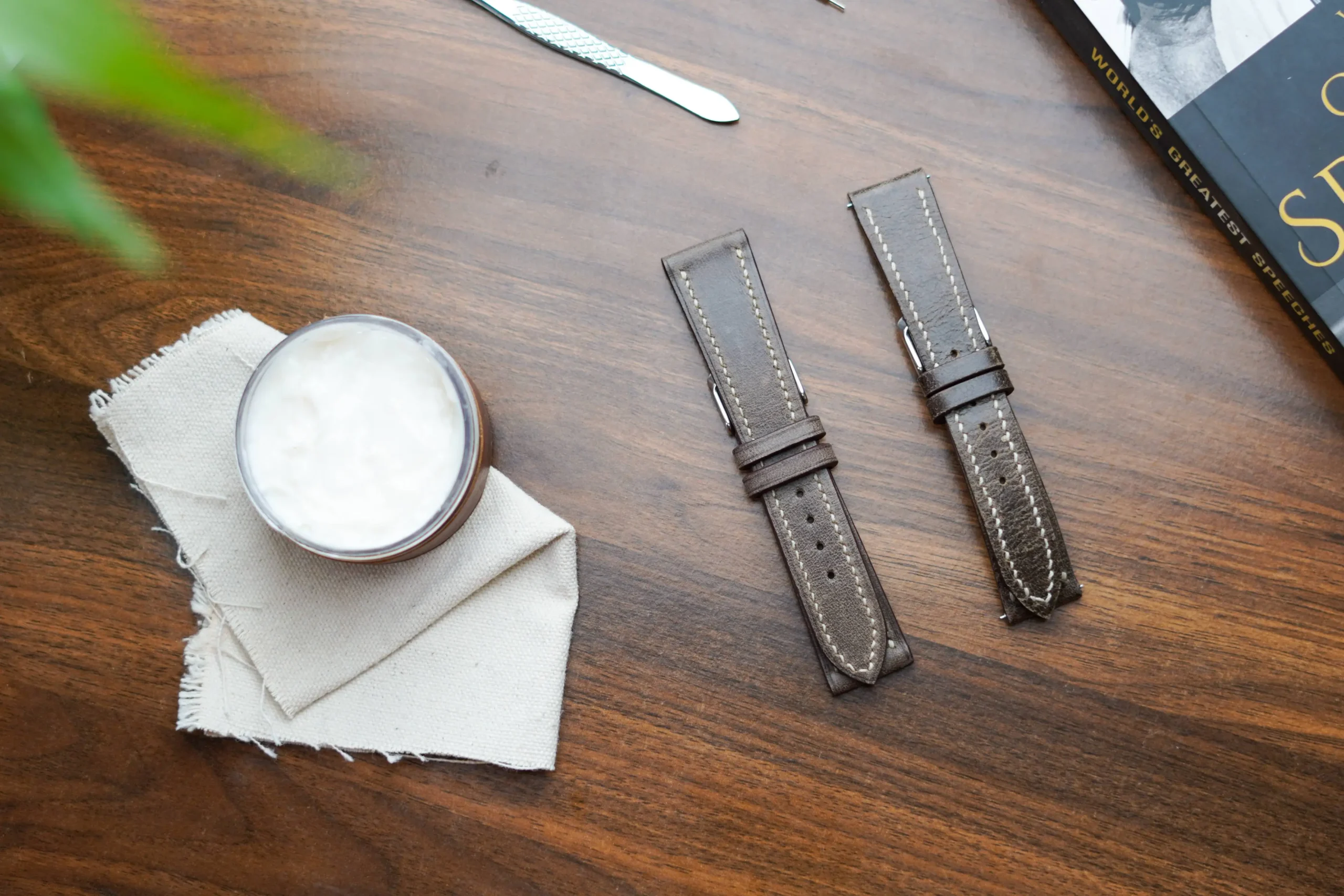
Sweat, Heat, and Humidity
Sweat is one of the bigger everyday challenges for a strap, since the lining sits right against your skin — something worth keeping in mind if you're wearing yours through India's warmer, more humid months. Perspiration alone won't destroy a strap, but repeated exposure without proper drying can gradually show up as a darkened lining, a change in texture, stiffening or softening, edge wear, or discolouration.
After a particularly hot or active day, a short routine goes a long way:
- Take the watch off and let the strap breathe.
- Wipe it gently with a clean, soft, dry cloth — no scrubbing.
- Leave it somewhere dry and ventilated to air out.
- Avoid sealing it straight into a closed box while it's still slightly damp.
- Switch to another strap and let this one properly rest.
This simple routine usually does more good than reaching for a conditioner.
Rain, Water, and the Occasional Splash
How leather responds to water depends a lot on the specific leather and finish — some finishes resist moisture reasonably well, while more absorbent or lightly finished leathers can show water marks quickly. Even a fairly water-resistant leather shouldn't be treated as waterproof.
As a general rule: a little unexpected rain isn't something to panic over, but deliberately swimming, showering, or soaking a leather strap is a different story entirely — leather and prolonged immersion just don't mix well.
If your strap does get properly wet, here's what actually helps:
- Remove it from the wrist as soon as you reasonably can.
- Pat it dry with a soft cloth — don't rub.
- Let it air-dry naturally somewhere ventilated.
- Keep it well away from direct heat — no hair dryers, radiators, direct sun, or hot surfaces. Rapid drying can leave leather stiff or distorted; slow and natural is the way to go.
- Hold off on conditioning until the leather is fully dry again.
And on showering specifically — even if your watch itself is water resistant, that doesn't extend to the strap. Hot water, soap, shampoo, and steam all accelerate wear on leather and its finish. If you're swimming or working out heavily, a rubber or water-oriented strap is simply the better tool for the job; save the leather for the occasions it's meant for.
Sunscreen, Perfume, and Moisturiser
An easy one to overlook. Skincare products can come into direct contact with your strap throughout the day, and things like sunscreen, perfume, and moisturiser can interact with leather finishes over time, sometimes contributing to staining or surface changes.
You don't need to give any of this up — just apply them first, let them absorb or dry, and put your watch on after. That small sequencing change cuts down on unnecessary direct contact.
Cleaning It the Right Way
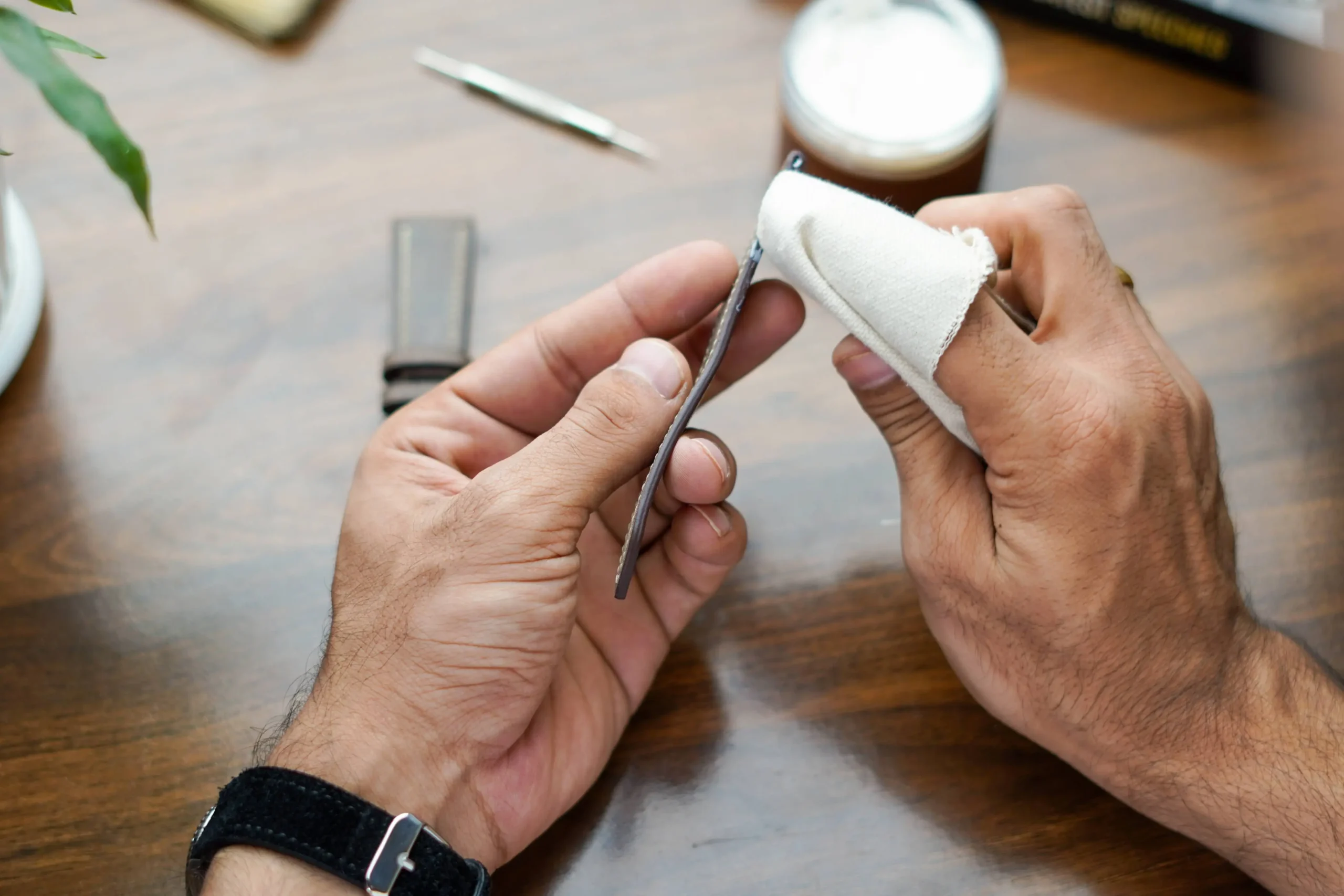
Routine cleaning should stay simple: a soft, clean, dry cloth, gently wiped over the surface to lift dust, fingerprints, and light residue. Leather isn't metal — it doesn't need polishing, just a light touch to clear surface contamination without disturbing the finish underneath.
What to actively avoid experimenting with: alcohol wipes, hand sanitiser, household cleaners, dishwashing liquid, bleach, perfume applied directly, petroleum-based products, cooking or coconut oil, and shoe or furniture polish. Leather isn't one uniform material — different tanning and finishing methods respond very differently to chemicals, moisture, and oils, so a product that's fine on one leather can genuinely damage another.
Do You Actually Need Conditioner?
Not necessarily — and this is probably the biggest misconception in leather care. It's not a simple equation of leather equals regular conditioning. Some leathers benefit from it; some finished leathers barely need it at all; and some delicate finishes can actually be negatively affected by the wrong product.
Before applying anything, it's worth knowing what leather and finish you actually have. When in doubt, gentle cleaning and sensible rotation are safer defaults than reaching for conditioner. If a product genuinely is recommended for your leather, use it sparingly — apply lightly, let it absorb, wipe away the excess, and always test on a hidden area first. Conditioning can shift colour, sheen, or texture slightly; that's not necessarily damage, just a product-driven change worth being conservative about.
The same caution applies to household oils. "Natural" doesn't automatically mean strap-safe — different oils can alter colour, feel, and flexibility, and some leave the surface greasy or dirt-attracting. If your strap genuinely needs conditioning, reach for something made for that leather specifically, not something from the kitchen.
Marks, Scratches, and Patina
Minor surface marks are simply part of owning leather. On many full-grain leathers, small marks soften and blend into the surface as the strap develops patina — that's part of the appeal, not a flaw to erase immediately. A useful rule of thumb: leave light marks alone and watch how they settle, gently wipe away surface dirt, and don't try to aggressively fix a deep scratch yourself — overcorrecting a small mark is how it becomes a much bigger, more visible one.
Storing It Between Wears
Storage is genuinely simple: keep it dry (skip damp cupboards or bathrooms), keep it ventilated rather than sealed away immediately, keep it out of direct sunlight for long stretches, avoid folding it into a sharp bend, and keep it at room temperature rather than near a heat source. If you've worn it heavily, wipe away surface moisture before putting it away.
A watch box is perfectly fine for storage — just don't treat it as a drying chamber. If your strap has absorbed sweat on a hot day, let it air out for a few minutes before it goes back in the box.
How Long Should a Strap Last?
There's no single number — lifespan depends on the leather, the finish, the construction, your climate, how often you wear it, how much moisture it sees, and how it's stored and cleaned. Someone rotating a few straps and keeping them away from water will generally get noticeably more life out of each one than someone wearing a single strap daily in a hot, humid environment.
Good care is about extending useful life, not chasing a specific number of years.
When It's Actually Time to Replace
A little patina is never a reason to retire a strap. Structural deterioration is — significant cracking, deep structural damage, a badly deteriorated lining, weakened stitching, damaged spring-bar areas, excessive stretching, or leather that no longer feels structurally sound. Your strap's core job is keeping your watch securely on your wrist; once that's compromised, it's time for a replacement.
Two spots deserve particular attention: the lug area, where the strap bends around the spring bar and takes the most repeated stress, and the buckle holes, which wear from the same motion every time you fasten the watch. Handle the strap deliberately when putting it on or taking it off, rather than forcing the buckle tongue through — a small habit that reduces unnecessary stress over time. And don't forget the lining itself; it works at least as hard as the visible leather, so keep it clean and dry, and don't ignore it just because the top side still looks great.
A Simple Do / Don't Reference
| Do | Don't |
|---|---|
| Rotate between straps | Wear the same strap continuously |
| Wipe away perspiration | Leave sweat sitting on the lining |
| Allow natural drying | Use a hair dryer |
| Store somewhere dry | Store while still damp |
| Use a soft cloth | Scrub aggressively |
| Avoid prolonged water exposure | Shower or swim with it on |
| Apply perfume before wearing | Spray perfume directly onto leather |
| Inspect the spring-bar area | Ignore structural damage |
| Use suitable leather-care products | Experiment with household oils |
Our Recommended Routine at Nakshara
For our own full-grain leather straps, we keep it this simple:
The Best Care Is Simply Wearing It Well
It's tempting to be overly protective of beautiful leather, but a strap exists to be worn. It will crease. Its colour will shift a little. The surface will smooth out where your wrist meets it most. None of that is failure — it's evidence the strap is doing exactly what it was made to do.
The goal was never to keep it looking exactly like the day it left our workshop. It's to help it stay comfortable, secure, and beautiful for as long as possible — while it quietly becomes yours.
With the right care, every mark, crease, and shift in colour becomes part of the strap's story rather than something to correct. Eventually it stops looking like something you bought, and starts looking like your strap.
Crafted by hand. Made to last.
Every Nakshara strap is built from full-grain leather, made to age well with a little care. If you have a specific question about your strap, we're always happy to help.