
The Lug Width Guide: What to Know Before You Order Your Next Strap
A short, practical guide to measuring your watch, choosing the right strap width, and avoiding the sizing mistakes that trip up most first-time buyers.
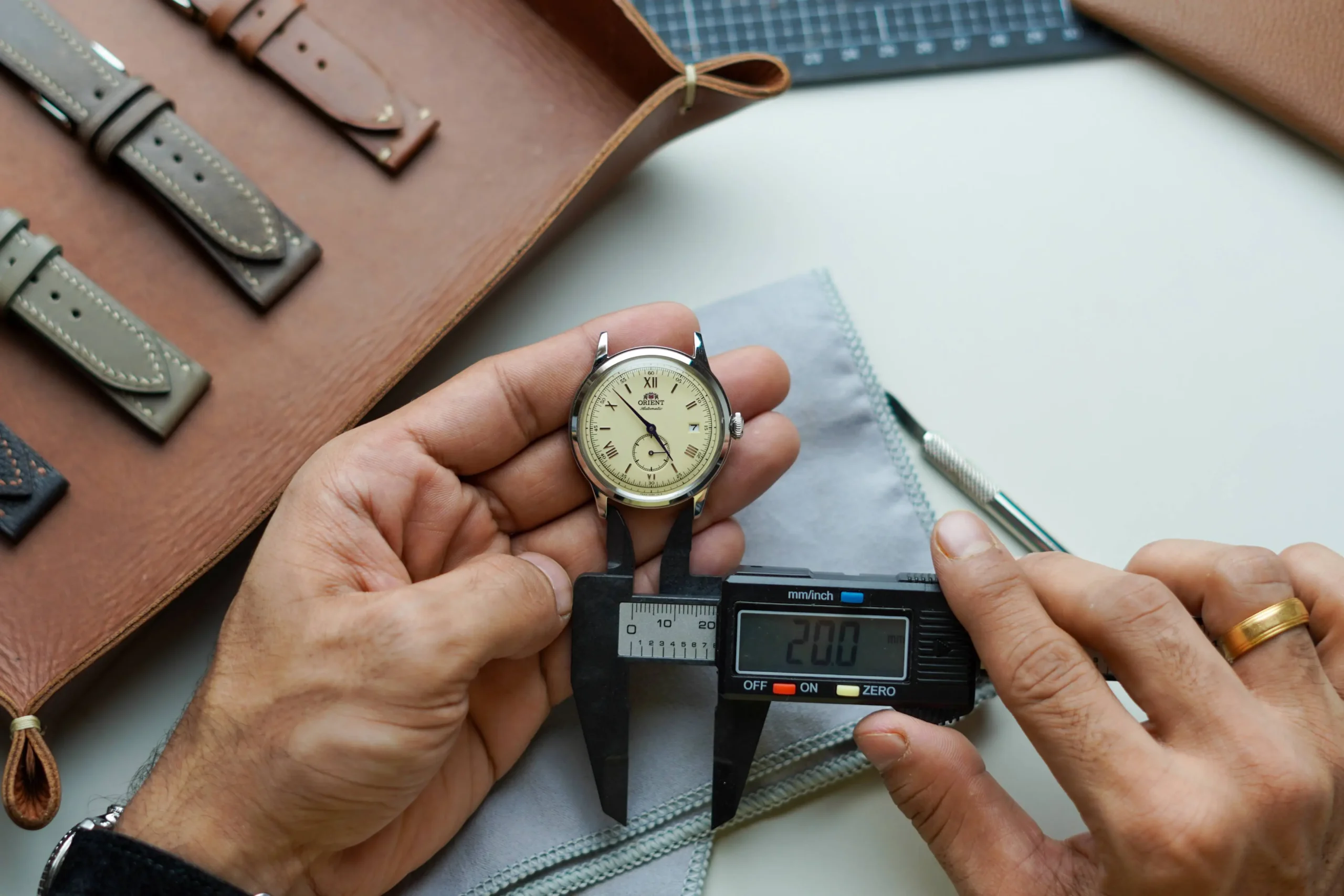
Somewhere between "I want a new strap" and "add to cart," there's a number that trips almost everyone up the first time: 18mm, 20mm, 21mm, 22mm.
It looks like a size, but it isn't the length of the strap and it isn't a style choice. It's the lug width — the gap between the two lugs on your watch case, where the strap actually sits.
Get this one number right, and everything else about your strap falls into place. Get it wrong, and even the best-made strap in the world won't sit properly. This guide walks through exactly what it means, how to measure it, and the handful of mistakes worth avoiding.
What Lug Width Actually Means
Lug width is the distance between the inner edges of your watch's two lugs — the small arms that reach out to hold the strap in place.
Whatever that number is, that's the strap size you need:
- 18mm lug width → 18mm strap
- 20mm lug width → 20mm strap
- 22mm lug width → 22mm strap
Some watches sit outside the usual sizes — 19mm and 21mm show up more often than people expect, especially on vintage or design-forward pieces.
Why This Number Actually Matters
A strap that's too wide simply won't fit between the lugs — that one's obvious.
The one people miss is the opposite problem: a strap that's slightly too narrow will still physically fit, but it leaves a visible gap on either side. Beyond looking a little unfinished, it also means the strap has more room to shift and wobble than it should.
The right width does something subtle but important — it creates a clean, continuous line from case, to lug, to strap. That small transition is a big part of why a well-fitted strap looks like it belongs on the watch, rather than just being attached to it.
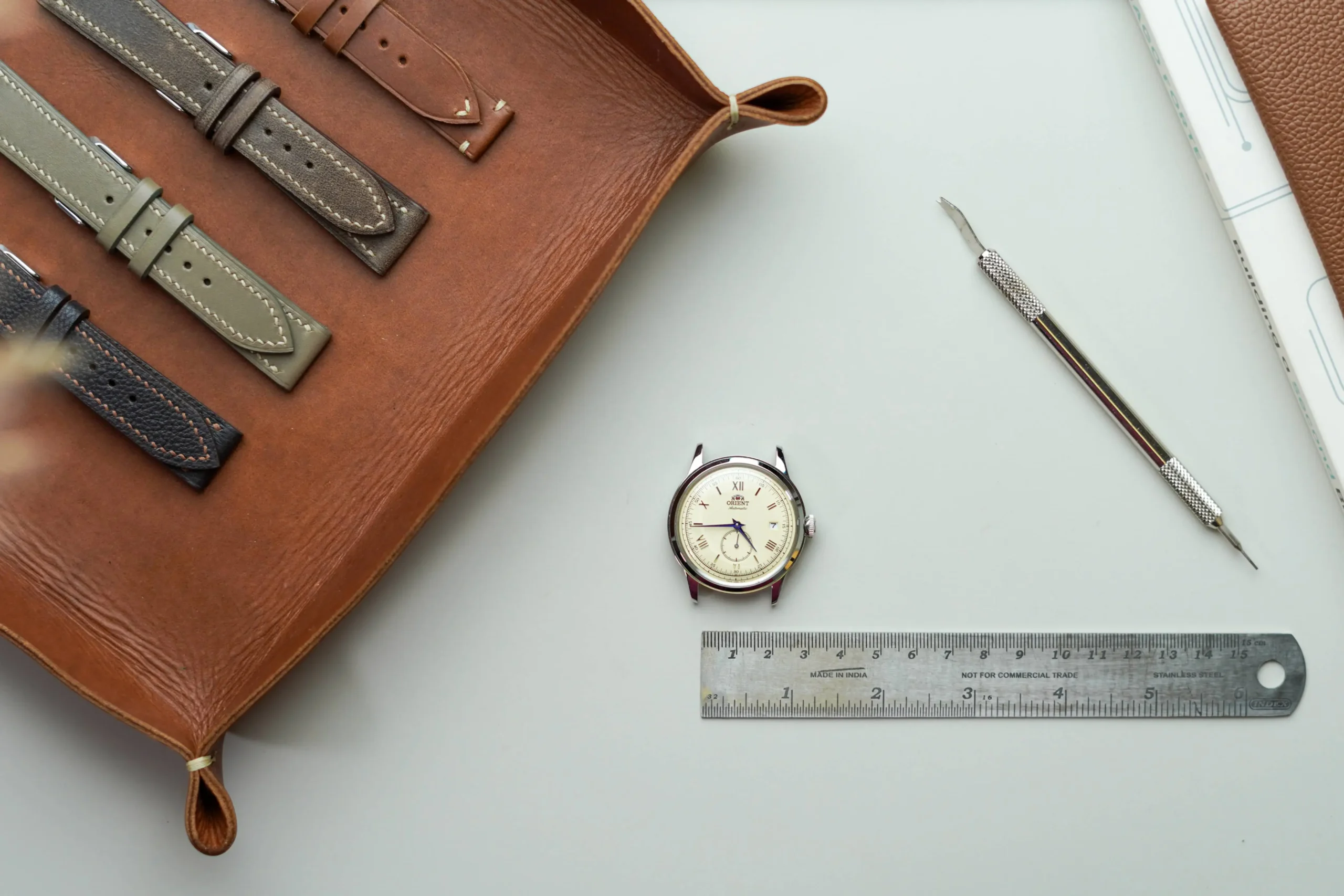
Three Ways to Find Your Lug Width
Check the manufacturer's specs
This is the fastest route. Most brands list lug width right alongside case diameter and lug-to-lug measurement on the watch's spec sheet or product page. If it says 20mm, you need a 20mm strap — no further math required.
Measure it yourself
No spec sheet handy? A ruler works, but a digital caliper is genuinely worth using if you have one — the gap you're measuring is small enough that a single millimetre matters. Measure the space between the inside edges of the lugs, where the spring bar actually sits, not the outer width of the case.
Send us a photo
If you're still unsure, a clear photo of your watch (ideally with the model or reference number) is usually enough for our team to help you land on the right size before you order. Reach out any time at hello@thenakshara.com.
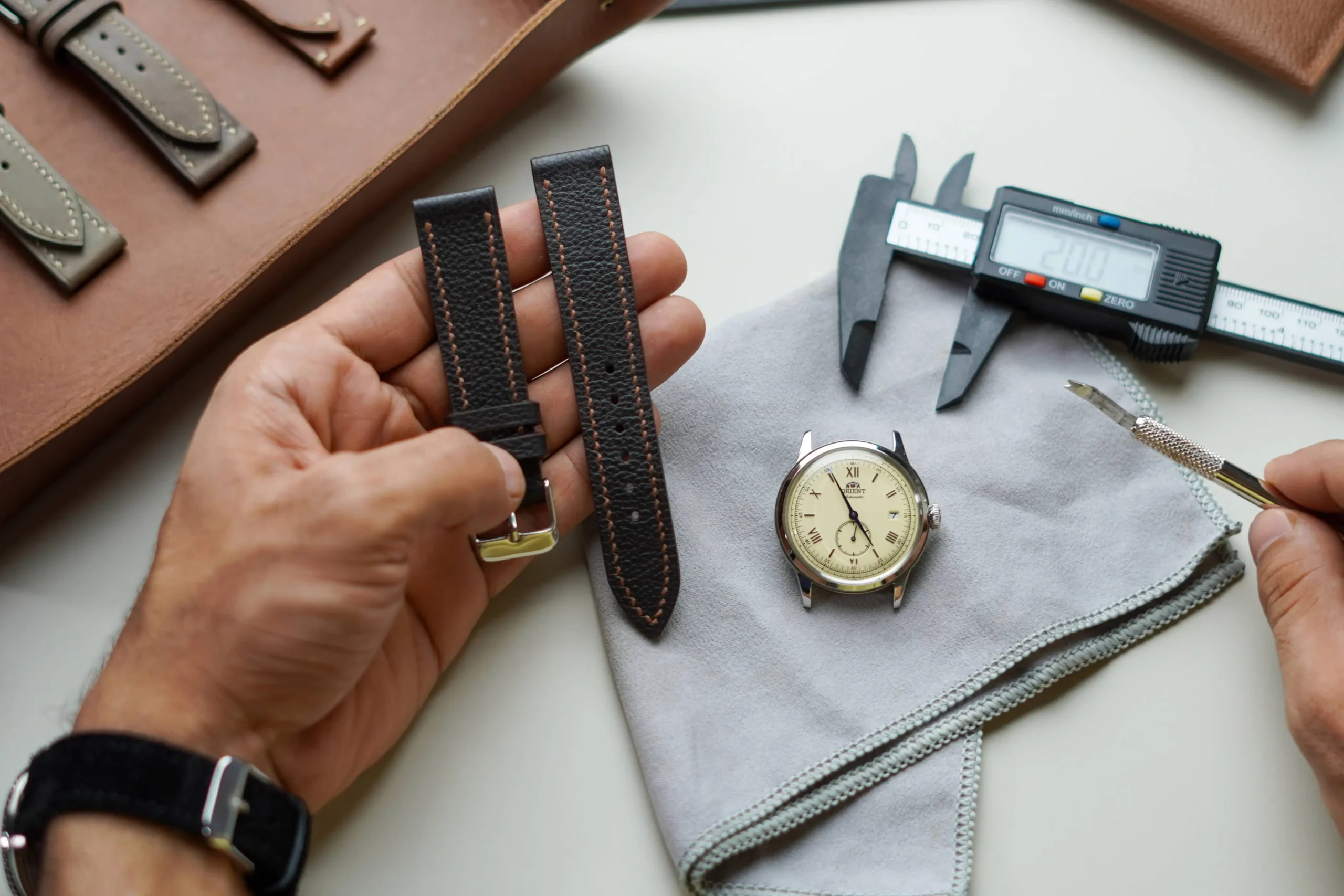
What If Your Watch Isn't a "Standard" Size?
More common than most new collectors expect. While 18mm, 20mm, and 22mm cover the majority of watches, plenty of pieces sit at 19mm, 21mm, or 23mm.
The instinct to round a 21mm watch down to 20mm (or up to 22mm) is understandable, but it defeats the purpose — a strap should match the lug width exactly, not approximately.
At Nakshara, most of our straps are made to order, which means uncommon widths are often still very much on the table. If your size falls outside the usual range, get in touch and we'll let you know what's possible.
Lug Width vs. Strap Width — Not Always the Same Thing
These two terms get used interchangeably, but they're not identical.
- Lug width describes your watch.
- Strap width describes the strap, measured at the end that meets the lugs.
For a straight, non-tapered strap, these two numbers match exactly:
| Watch Lug Width | Strap Size |
|---|---|
| 18mm | 18mm |
| 19mm | 19mm |
| 20mm | 20mm |
| 21mm | 21mm |
| 22mm | 22mm |
Where it gets more interesting is the other end of the strap — the buckle.
Straight or Tapered? The Buckle Width Question
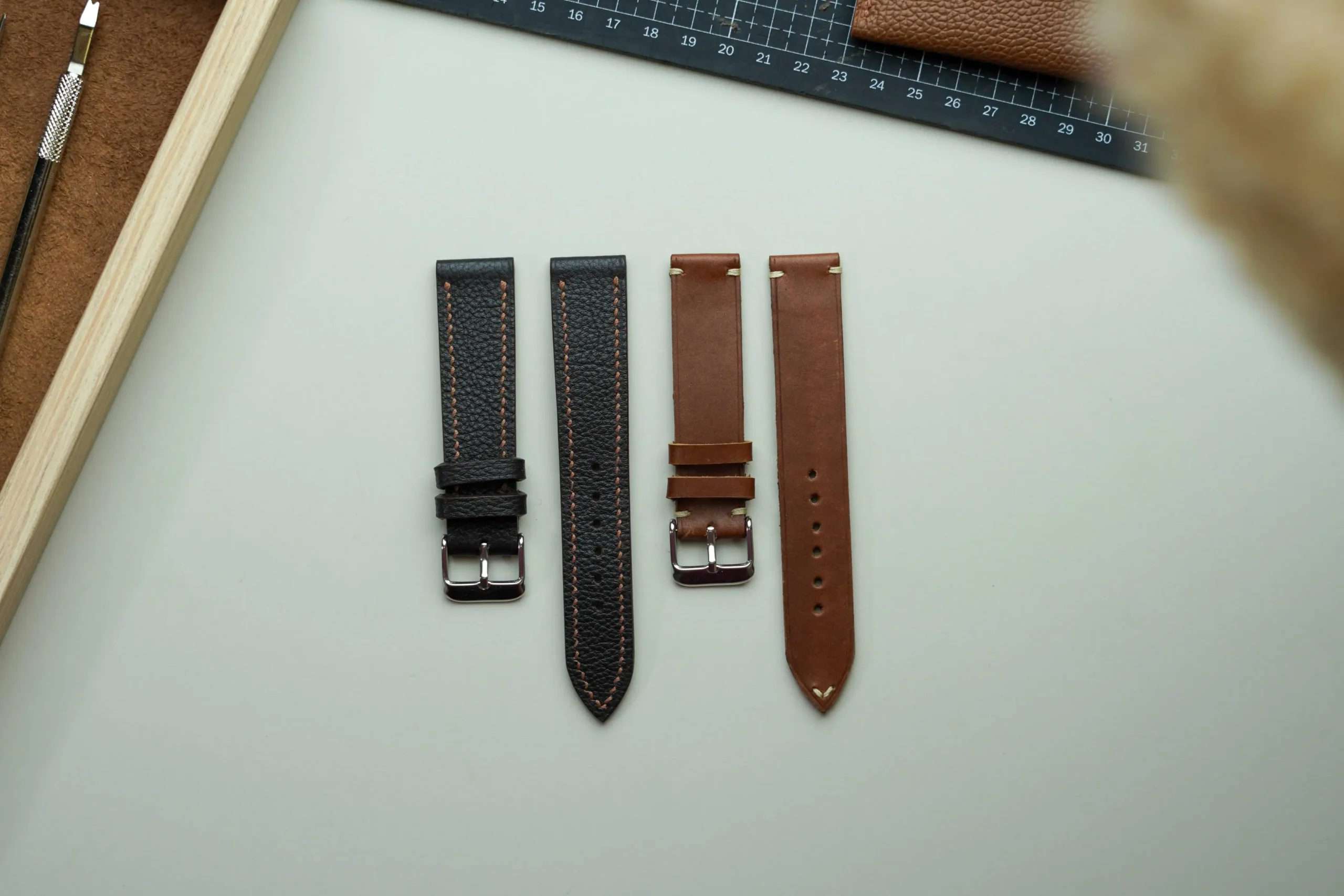
A strap doesn't have to stay the same width all the way down. Plenty of straps are wider at the lug end and narrower at the buckle — for example, 20mm tapering to 18mm.
This is called a tapered strap, and it's a deliberate design choice: the wider end follows the proportions of the watch case, while the narrower buckle end sits lighter and more refined against the wrist.
That said, a straight strap (20mm to 20mm, no taper) is far from a compromise — it tends to suit sportier or tool-style watches particularly well. Neither option is objectively "better"; it comes down to the watch and the look you're going for.
Don't Confuse Lug Width With Lug-to-Lug
This mix-up trips people up constantly, especially when watch-shopping.
- Lug width tells you which strap fits your watch.
- Lug-to-lug tells you how the watch wears on your wrist — the distance from the very tip of one lug to the tip of the opposite lug.
They're unrelated measurements answering two different questions. A watch might have a 20mm lug width and a 48mm lug-to-lug distance — one number is about strap compatibility, the other is about how large the watch will feel on your wrist.
Does Case Size Predict Strap Size? Not Really.
It's a reasonable assumption — a bigger watch should need a wider strap, right? Not necessarily.
Two watches with the exact same 40mm case diameter can have completely different lug widths — one might sit at 18mm, another at 20mm. Case size and lug width simply aren't tied together in any fixed way, which is exactly why guessing your strap size from the case diameter alone is a common way to end up with the wrong one.
A Quick Note on Spring Bars
The spring bar is the small pin that sits between the lugs and actually holds the strap in place. It needs to be the right length for your watch, and its diameter needs to suit your lugs' spring-bar holes.
If your watch takes quick-release spring bars, swapping straps becomes noticeably easier — often no tool required at all. Whichever type you have, it's worth double-checking that any spring bars included with a new strap are actually compatible with your specific watch before you rely on them.
Three Numbers Worth Remembering
When you're choosing a strap, there are really only three measurements in play:
- Lug width — what width strap physically fits your watch
- Strap length — what length suits your wrist comfortably
- Buckle width — whether the strap runs straight or tapers down
Get these three right, and most of the usual sizing confusion disappears entirely.
Before You Order
A quick checklist worth running through before adding a strap to your cart:
- Lug width confirmed
- Strap length suits your wrist
- Buckle width — straight or tapered, your choice
- Spring bars compatible with your watch
- Decided: straight profile or tapered
If any of this feels uncertain, don't guess — a photo of your watch and its reference number is usually all we need to help you land on the right configuration. You can also visit our sizing guide for a closer walkthrough.
Crafted by hand. Made to last.
We think a strap should feel like it was made for your watch, not just fitted to it. Every Nakshara strap is handcrafted to order — cut, stitched, and finished one at a time.